

Contrave combines naltrexone and bupropion
Contrave is a prescription weight-management medicine. It contains naltrexone, but it is not standalone naltrexone and is not used as a substitute for alcohol or opioid treatment.
Why the product name matters
Each Contrave extended-release tablet holds 8 mg naltrexone hydrochloride and 90 mg bupropion hydrochloride. In the US it is indicated for chronic weight management in specified adults, alongside reduced-calorie eating and more physical activity.
The word ‘naltrexone’ on the box can mislead you. The bupropion in Contrave changes what the product is for, who can take it, which side effects to expect, how it is dosed and what its boxed warning says. A prescription for standalone naltrexone cannot be filled with Contrave, and the reverse is also true.
Contrave is indicated for adults with:
- A BMI of 30 kg/m² or greater (obese), OR
- A BMI of 27 kg/m² or greater (overweight) with at least one weight-related comorbidity such as hypertension, type 2 diabetes, or dyslipidaemia
These are label criteria, not a self-screening checklist. A prescriber also needs to review blood pressure, seizure risk, eating-disorder history, opioid use, other medicines, pregnancy, and mental health.

How Contrave works
The exact mechanism is not fully understood, but research suggests two complementary effects.
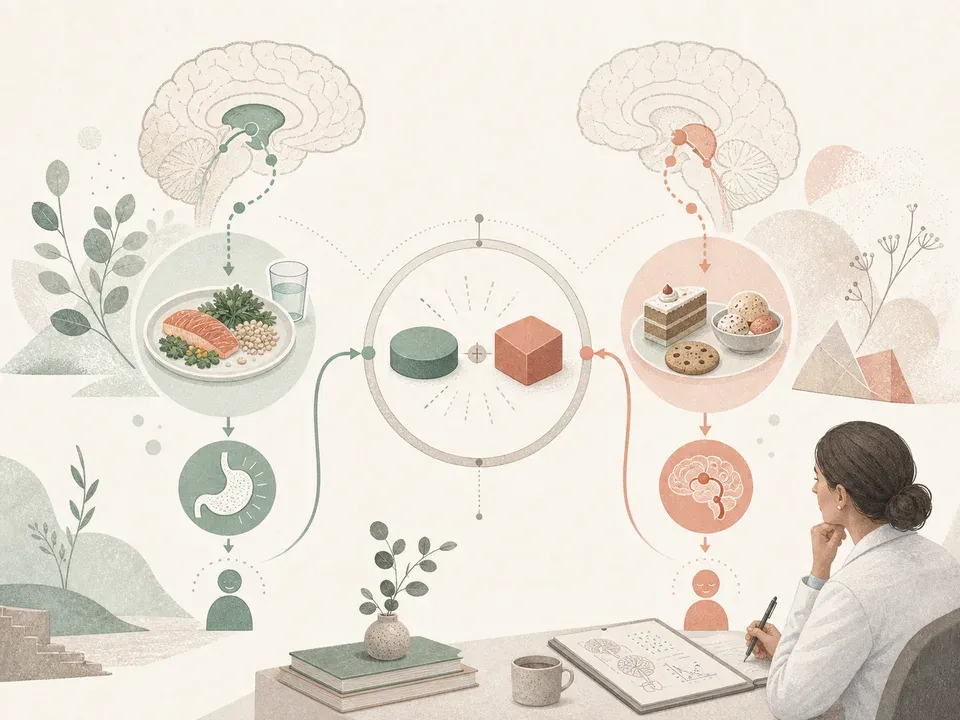
- Appetite regulation (hypothalamus). Bupropion appears to stimulate pro-opiomelanocortin (POMC) neurons in the hypothalamus, which release alpha-MSH — a hormone that reduces appetite and increases energy expenditure. Naltrexone blocks a feedback mechanism that would normally shut off this effect, prolonging the appetite-suppressing signal.
- Food reward reduction (mesolimbic system). The dopamine-driven reward system in the brain releases dopamine when you eat pleasurable foods. This system can drive overeating and food cravings. Contrave appears to modulate this reward pathway — particularly reducing cravings for high-fat, high-sugar foods — by affecting how dopamine and endogenous opioids interact in the mesolimbic circuit.
Contrave and standalone naltrexone
| Contrave | Standalone oral naltrexone | |
|---|---|---|
| Ingredients | Naltrexone plus bupropion | Naltrexone |
| US treatment context | Chronic weight management for specified adults | Alcohol dependence and opioid blockade after detoxification |
| Release and strength | Extended-release 8 mg/90 mg per tablet | Commonly a 50 mg naltrexone tablet |
| Safety profile | Includes bupropion boxed warning and product-specific contraindications | Separate naltrexone label and opioid-initiation checks |
Facts that identify the product
Use these to avoid confusing trial or safety information with standalone naltrexone.
- Per-tablet strength: 8/90. 8 mg naltrexone hydrochloride plus 90 mg bupropion hydrochloride.
- Extended release: ER. The release design and labelled titration are part of the product.
- Initial US approval: 2014. Approved for chronic weight management, not addiction treatment.
- US label review point: 16 weeks. The prescriber evaluates response using the label’s stopping rule.
Common questions about Contrave
How is Contrave different from standalone naltrexone?
Contrave combines naltrexone with bupropion and is approved for chronic weight management. Standalone naltrexone products used in addiction treatment have different doses, indications, labels, and contraindication checks. They are not interchangeable.
What does the trial evidence show?
Pivotal trials found greater average weight loss and more 5% responders than placebo. Individual response varies, discontinuation was substantial, and the FDA label uses a 16-week evaluation and stopping rule.
Is cardiovascular safety established?
No. The FDA label says the effect on cardiovascular morbidity and mortality has not been established. The LIGHT outcomes trial ended early after interim-data disclosure and did not provide a definitive assessment.
Can Contrave be used with opioids?
Chronic opioid use is contraindicated. The label gives opioid-free interval and overdose warnings; transitions from buprenorphine or methadone may require particular caution. Follow the current label and prescriber plan.
How much does Contrave cost?
Prices vary. Your market, insurance, pharmacy, assistance eligibility and pack size all change what you pay, so ask the pharmacy for a current itemised quote. Coupon and cash-price estimates are a poor guide.
Compare the evidence for the question you actually have
Thinking about Contrave? Start with the weight-loss evidence. Looking for alcohol or opioid treatment instead? The standalone naltrexone guide is the one to read.
Review Contrave weight-loss evidenceUnderstand standalone naltrexone
Sources
Checked .